The Inside Word

Example of a Program Logic: Queensland Child Safety
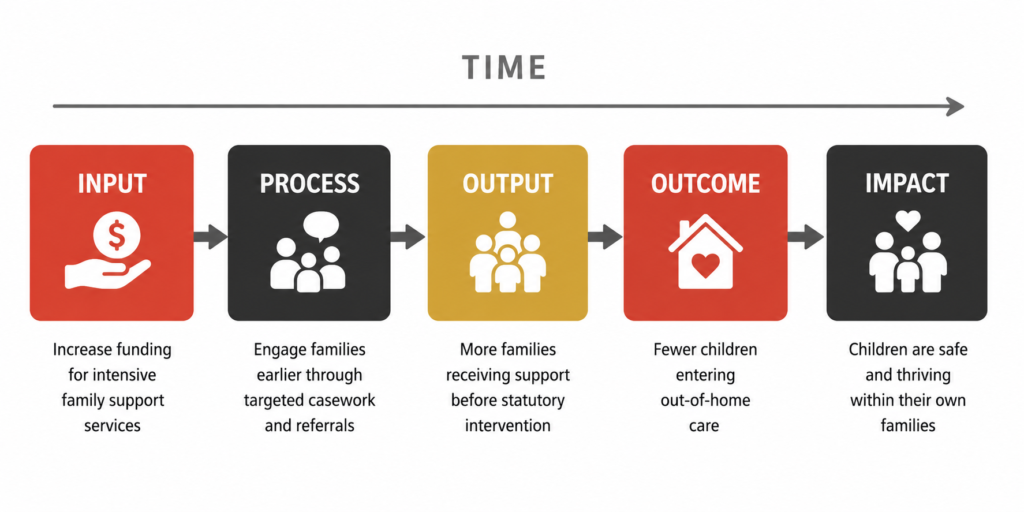
Every policy or program can be broken down into five sequential stages. Each build on the last, moving from what you put into the system to the lasting change you hope to create. Here’s what each stage means, using Queensland’s Child Safety system as the example.
1. Inputs are the resources committed to make the program possible. In Child Safety, this includes trained Child Safety Officers, Queensland Government funding, foster and kinship carers, and the IT systems used to manage cases.
2. Process are the actions taken with those resources. This includes investigating reports of harm, delivering family support services, placing children in safe care arrangements, and developing cultural support plans for First Nations children.
3. Outputs are the countable, short-term products of those activities – the things you can tally. For example: the number of investigations completed, the number of families receiving support services, or the number of children placed in out of home care during a year.
4. Outcomes tell you whether the outputs actually made a difference. In this context, an outcome would be fewer children being re-harmed after intervention, more families safely reunified, or improved placement stability for children in out-of-home care.
5. Impact is the long-term societal change the system exists to achieve. For Queensland’s Child Safety system, that impact is a state where all children are safe, thriving, and connected to family, culture and community.
The distinction between outputs and outcomes is where most organisations get stuck. Completing 10,000 investigations is an output. Whether those investigations actually kept children safer is the outcome. Counting activity is necessary, but it is not the same as demonstrating impact.
The figure below shows how these five stages flow sequentially over time for a Child Safety example focused on family support services.