



The Inside Word
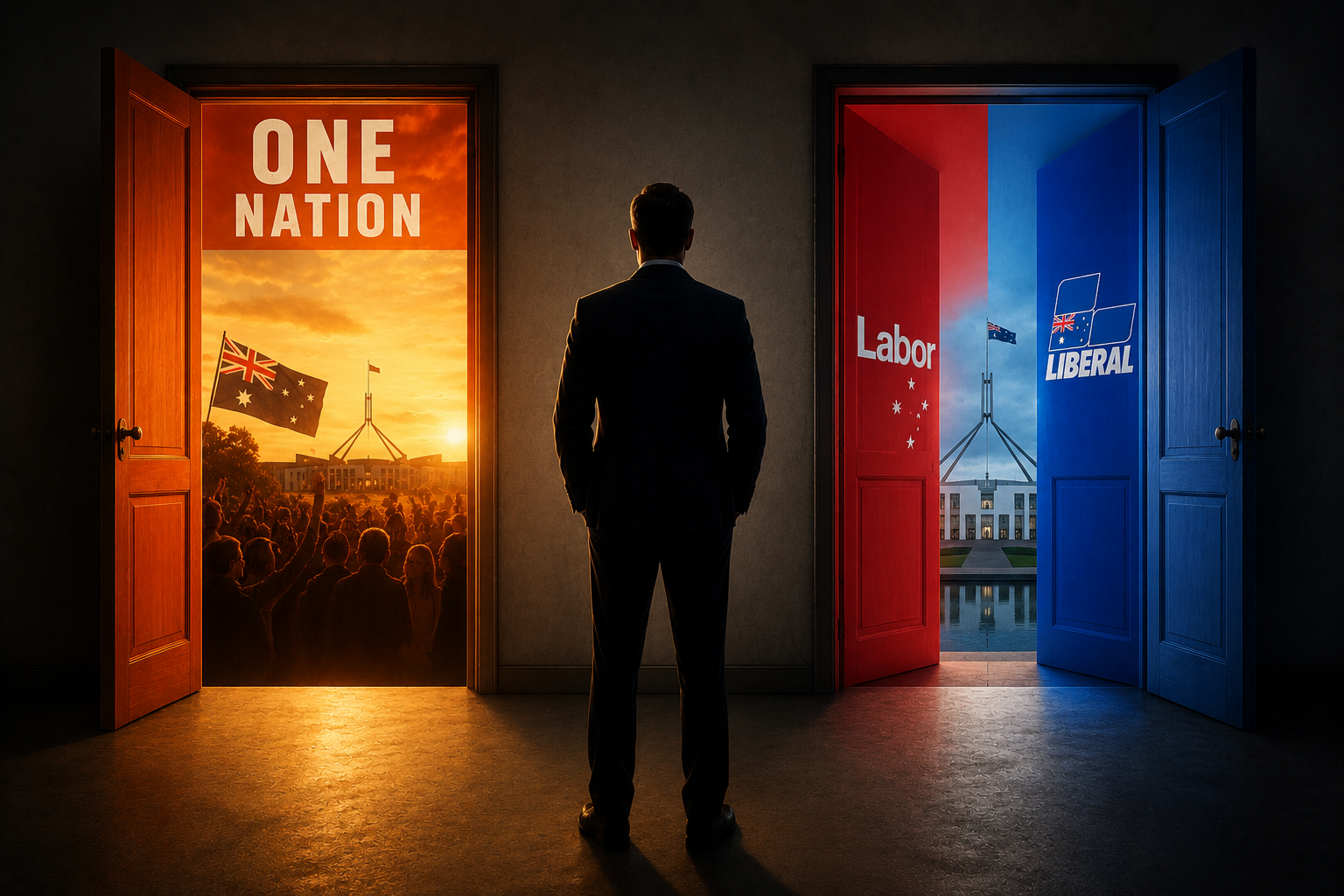
Sliding Doors moments
The United States – comprising 13 states along the east coast of North America – has defeated England in the final Ashes test in New York and remains the undisputed king of world cricket; Pennsylvania is facing bitter rival Virginia in the final State of Origin match; Australie is the largest French speaking nation outside France; and Louis XXI is Australie’s head of state.
These scenarios could have been a reality if Britain had won the American War of Independence. Instead, the signing of the Declaration of Independence 250 years ago – arguably the biggest hinge moment in modern history – will be proudly celebrated by millions on July 4th.
When America’s Founding Fathers signed the landmark declaration at Pennsylvania State House, it was the first time a nation enacted three branches of government – the executive, the legislature and the judiciary (the system Australia has today). Without it, it’s highly unlikely the United States would exist today with 50 states – or perhaps at all … in which case the original 13 colonies would almost certainly have emulated British sporting traditions.
Losing the American colonies was one of many reasons Britain colonised Australia, but without the First Fleet, it’s highly likely another European power – probably France – would have settled the nation we all call home. Meanwhile, the French Revolution of 1789 was also influenced by the American Revolution and, had the former not occurred, it’s possible the inspiration may not have occurred for the latter.
A moment in history like the Declaration of Independence can change the entire political direction of not just a nation, but the world. What if Britain hadn’t vote for Brexit 10 years ago? Would the country be about to have its seventh Prime Minister in that period?
Closer to home, is Australia facing its own hinge moment with the rise of One Nation? Its impact on Australian politics (short and long-term) is by no means remotely comparable to 4 July 1776, but it certainly could have a material effect on Australia’s course for decades to come.
One Nation may fizzle out. It may achieve some electoral success, then implode. Candidates with fringe/weird attributes may turn voters back to the major parties. But even if any or all these scenarios occur, there’s never been a time when a ‘minor party’ has begun to outpoll both major parties in numerous federal polls.
If One Nation obtains power in any jurisdiction – in its own right or in minority government – we would see a shift in policy. Immigration is the obvious one, but we’d also see a strong surge towards Australia-first style policies ranging from energy to trade.
While policy changes could be short-term, there could be long-term changes that much of the commentariat are brushing over.
If One Nation replaced the LNP as the dominant party on the centre-right, it would accelerate fragmentation in Australian politics. A breakdown in the traditional ‘two-party’ electoral contest would impact the way government functions in Australia and, if neither Labor nor the LNP ever again governed in their own right, we would see marble-cake style administrations that could lead to less stability.
Regional Australia could vote One Nation; there would be Liberal and Teal tussles in leafy seats; ‘alternative’ metro areas could see a Labor v Greens contest; and in the ‘burbs, we’d see a three-way slug between Labor, Liberal and One Nation. Good luck to any party seeking a majority with those electoral dynamics.
How political parties conduct elections would also change. We would see debates with five leaders, loose alliances between parties, and electoral strategies that abandon winning a majority and seek the highest minority vote.
Political parties – major and minor, left and right, old and new – would need to adjust to how they operate in parliament. Loose coalitions would not only restrict the authority of a Prime Minister but also how long they’re in office before the leader of another power-sharing party gets to wear the crown.
This is all crystal-ball gazing, but if there’s a shift from the traditional two-party system to a multi-party marble cake, it would change how business and the community engage with government. Not only tactics, but also the overarching strategy and communications techniques deployed to obtain an outcome with elected officials. It might not be anywhere near as seismic or exciting as 4 July 1776, but Australia could be undergoing a permanent structural change to its politics. Whether for better or for worse, time will tell.