



The Inside Word
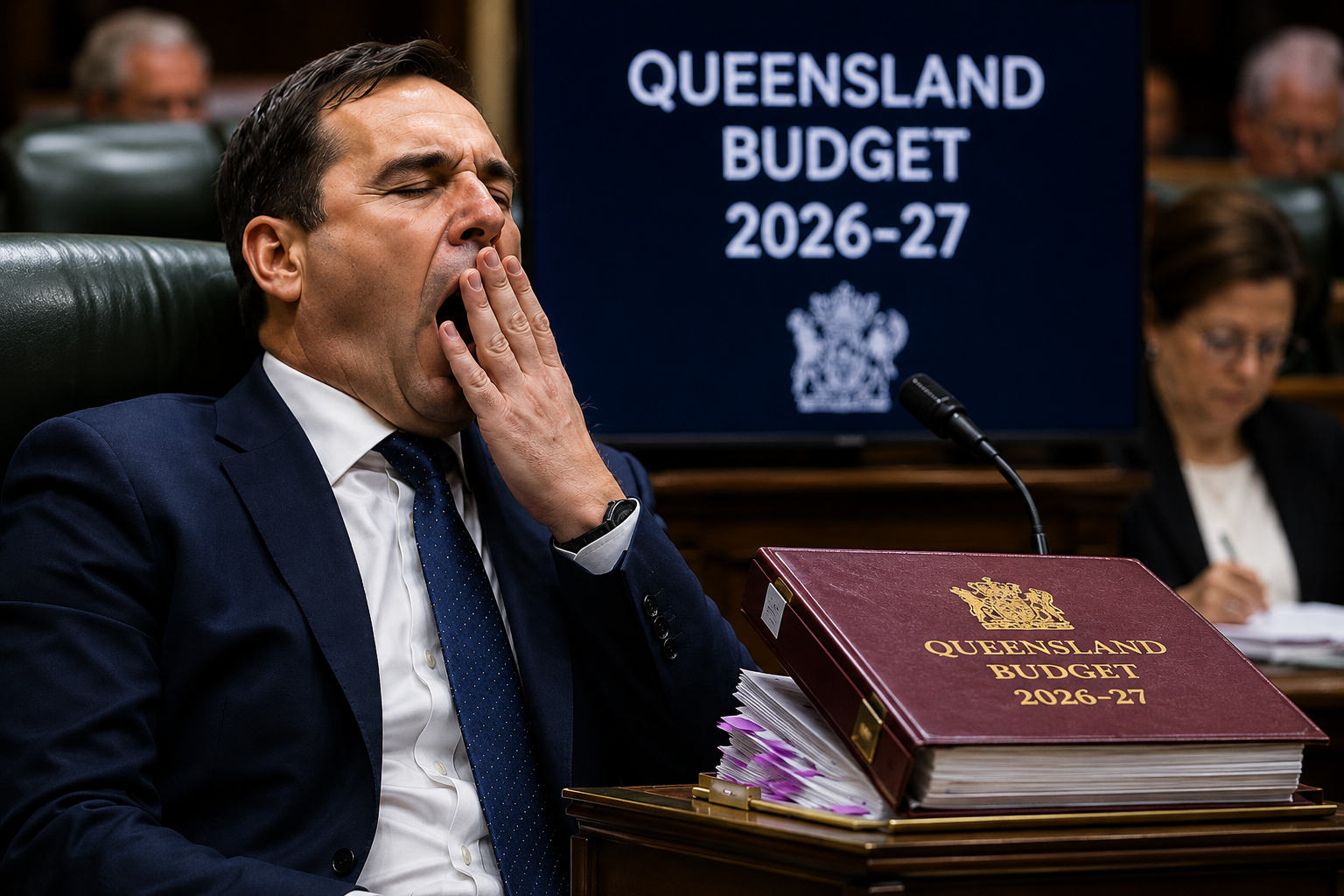
No sugar hits. No headlines. No problem.
Let’s play a game: without googling, asking a friend or looking at social media – sum up your instinctive reaction to the recent QLD Budget in one word.
If you’re struggling to even think of an answer, you can be forgiven. The Football World Cup, State of Origin, a UK Prime Minister resigning, the ongoing tensions in the Strait of Hormuz, and the recent Federal Budget (among other news stories) have flooded out any real coverage of David Janetzki’s second Budget.
In a word, the Budget was boring. And that’s exactly what the Government wanted.
Budgets that make headlines tend to do so because they’re unpopular. Those that stick in the mind aren’t remembered because the Treasurer of the day got up and announced a silver bullet solution to a complex problem plaguing society. Whether it’s Joe Hockey’s budget in 2014 or the one handed down in May by Jim Chalmers, a budget that generates water cooler discussion is usually due to unpopular measures mixed with broken promises.
There were some relief measures in the QLD Budget, such as vehicle registration concessions, school sports vouchers and permanent 50-cent public transport fares. But as the Premier stated, it was a Budget with “no sugar hits”, but “relief you can rely on”.
‘Debt and deficit’ doesn’t elicit heated debate in watering holes across Queensland like State of Origin matches does. But the Treasurer being able to outline a path back to surplus – albeit not until 2029–30 – while avoiding political backlash is an outcome the Government won’t be unhappy about.
Put another way, this Budget doesn’t give much for Steven Miles and the Labor Opposition to attack, and that was undoubtedly one of the aims from the LNP’s perspective.
Let’s not forget, many on the Government frontbench are still haunted by the one-term Newman Government (the Premier lost his own seat at that election). They simply want to get on with the job of day-to-day governing, addressing the issues they were elected on, and ultimately achieving re-election. A mid-term Budget that lowers debt, provides modest but practical cost-of-living measures, while avoiding intense public interest, won’t hurt the Government’s political standing.
Meanwhile, the Queensland Redistribution Commission has released its final report into the state’s electorate redistributions. It has maintained the sweeping changes contained in the preliminary report, which include the following of note:
- The abolition of the north Queensland seat of Hill (held by the Katter Party) and the Brisbane electorate of Stretton (held by Labor).
- Two new electorates called Caboolture and Springfield.
- 19 electorates to undergo a name change to reflect the major suburbs they represent.
Numerous seats across the state will also see boundary changes that reflect a potentially material change in which party will be best placed to win those respective seats in 2028.
The most notable change is that of the Gold Coast seat of Gaven, which was won in 2024 by Labor’s Meaghan Scanlon but, on the new boundaries, would have been won by the LNP. A rising star and potential future leader, attention will now turn to whether Ms Scanlon seeks to find a new seat ahead of the next election.
A little over 18 months into the term, and the Government won’t be too disappointed with where it sits. It has an Opposition Leader under the pump internally, polls suggest it’s withstanding the One Nation surge occurring federally, and the redistribution changes appear favourable.
But if a week is a long time in politics, then 2.5 years is a millennium.