



The Inside Word
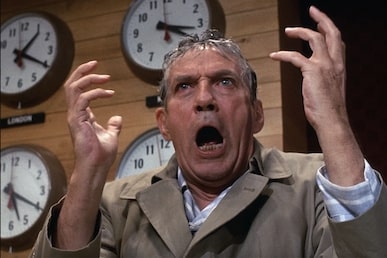
Mad as hell and not going to take this anymore
Here’s a quick bit of movie trivia. Which Australian is the only person to win a posthumous Oscar for Best Actor? Those who quickly answered Health Ledger… are wrong. (He won Best Supporting Actor after his death.)
The correct answer is Peter Finch, for his lead role in the movie Network, which was released 50 years ago in 1976.
Those old enough to know the movie will remember his famous breakdown scene, where he rails against high oil prices, crime, cost of living, Russian military aggression and unemployment. And – recognising he has no solutions to these problems – he instead urges his viewers to just “get mad” so the politicians pay attention. He implores them to rush to their windows and shout “I’m as mad as hell and I’m not going to take this anymore!”.
Fifty years later, here we are again. Same issues. Same feeling of disempowerment across large swathes of the population. Same message for the politicians.
Voters are yelling out that they’re mad as hell and they’re not going to take this anymore. Only 50 years later, instead of shouting out their windows, Australians are shouting it to pollsters. In record numbers, people are turning their backs on the major parties and responding to the voices that are urging them to get mad and stay mad.
Just as Senator Pauline Hanson and her One Nation Party have dominated political discussion in the past month, so too it’s been the talk of the water cooler here at the SAS Group. Many of my colleagues have shared their views on the One Nation phenomenon below – how and why, temporary or permanent.
My two cents’ worth is this: both sides of politics are trying to use conventional political weapons to fight a guerilla army – one that doesn’t play by mainstream rules and isn’t held to the same standards (credible policies, costings, etc.) by voters. Partly this is because people are mad as hell at the system, and they are grabbing the opportunity to lash out. But largely it’s because – following the Budget’s broken promises – they see that the major parties don’t play by the rules themselves, so why should One Nation be held to that standard.
While the government and opposition credit One Nation’s popularity to specific issues – cost of living, immigration, culture wars – I think it’s a reaction to all of those issues. And none of them at the same time.
I believe voters swarming to One Nation are lashing out at a political system that they feel no longer represents their interests or speaks for them. Some will say it never did. This is a reaction to perceptions of a broken system that operates for elites.
Of the mainstream parties, the first to show these disaffected voters that it understands why they’re mad as hell will have a headstart in bringing them back into the fold. But words will not do the job anymore. Labor and the Coalition must find ways to give citizens more than a vote – they must give them a voice.
Former Queensland Premier Peter Beattie very successfully reversed the last significant incursion by One Nation after the 1998 state election, with a series of reforms that moved his government closer to the people. Notably, he expanded the Regional Cabinet program to take all his ministers out to community forums and events every couple of months. And once each term, under Beattie’s stewardship, the State Parliament held a week-long sitting outside Brisbane – Rockhampton initially, then in other regional centres.
So far though, neither side in Canberra is showing any sign of understanding the reasons for anger, let alone how to fix it. Globally, the best attempt so far is by the putative British PM Andy Burnham. Burnham has outlined a plan for “the biggest rebalancing of power” to fix what he calls the “broken” political system.
This includes creating an alternative Prime Ministerial HQ – “Number 10 North” – in Manchester, encouraging government departments to base more of their people in regional areas, and devolving local decision making to Scotland and Wales.
Burnham isn’t even in office yet, so his commitments are yet to be tested. But he is showing at least an understanding of why voters are flocking to protest parties. Anthony Albanese and Angus Taylor could do worse than try the same thing here.