



The Inside Word
Money, mission, and the trade-off myth
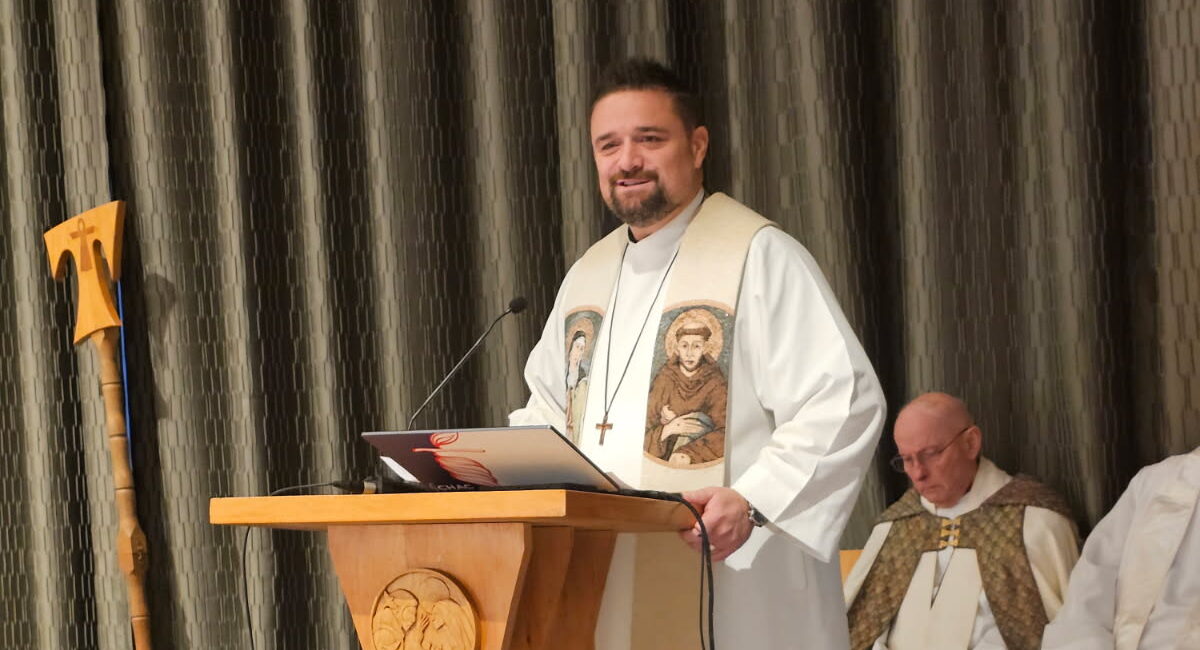
Three years ago, if you’d told me I’d be writing a column for a corporate advisory newsletter, I’d have laughed. For most of my ministry, I stood in parishes, not boardrooms. I still do, some days. I continue to offer sacramental ministry as an Anglican Priest and a Third Order Franciscan, having taken vows of simplicity that ask me to hold possessions lightly and live modestly. So, when I stepped into a bivocational role here at SAS Group, advising corporate and not-for-profit clients on commercial, political and media strategy, I brought a genuine crisis with me. How does someone who has promised to live simply, and who has spent two decades believing the church’s job was to care for people the market forgets, now spend his days talking about margins, investment strategies, and enterprise value?
I want to be honest with you about that wrestling, because I suspect many of you are wrestling too. If you lead a charity, a community health service, an aged care provider, or any organisation now being asked to behave like a business after decades of block funding, you know this tension in your bones. It can feel like betrayal, as though pursuing revenue is a compromise of mission, and every dollar earned is a dollar somehow stolen from care.
I don’t believe that anymore. And I got there by drawing upon centuries of Franciscan history.
Francis of Assisi is remembered as the saint of poverty, the man who stripped off his clothes in the town square and walked away from his father’s wealthy business. It would be easy to assume Franciscans see money as corrupting. But the historian Giacomo Todeschini, in his book Franciscan Wealth (2009), traces something more interesting: it was Franciscan friars, in the thirteenth and fourteenth centuries, who developed much of the theological and intellectual groundwork for market economics as we know it. They didn’t do this by abandoning their values. They did it by asking a sharper question than “is money good or bad?” They asked: where does this wealth come from, and where is it going?
Wealth generated through fair exchange, honest labour, and mutual benefit, and then directed back toward the common good, was not just permissible — it was a legitimate expression of care for others. The problem was never money itself. The problem was wealth hoarded, wealth extracted unjustly, or wealth pursued as an end rather than a means.
That distinction changed everything for me. It let me stop asking “should we be commercial?” and “should I as a Priest and Franciscan be in the marketplace of money?” and start asking the far more useful questions: How are we generating this income? Does it depend on treating people, staff, or clients fairly? And once we have it, what are we doing with it? Those are the questions I now bring to every client conversation at SAS Impact and every wider SAS Group staff meeting, leadership gathering, and company strategy session.
This matters enormously for those of us navigating the shift from grant dependency to enterprise thinking. You are not selling out by building a sustainable revenue model. You are not betraying your funders by pricing your services, seeking commercial partnerships, or generating revenue. The trade-off between money and mission is largely an intellectual fabrication — what matters is the integrity of how we earn and the discipline of what we do with what we earn.
It’s taken years to feel comfortable with both money and mission. I’ve had to make the intentional decision to wrestle with it, carry it, allow myself to be challenged by it. It was rarely enjoyable, and I still have a way to go. But as a result of this experience, I hope I can make that journey a little more comfortable for you.
I’m glad we’re walking this road together.