



The Inside Word
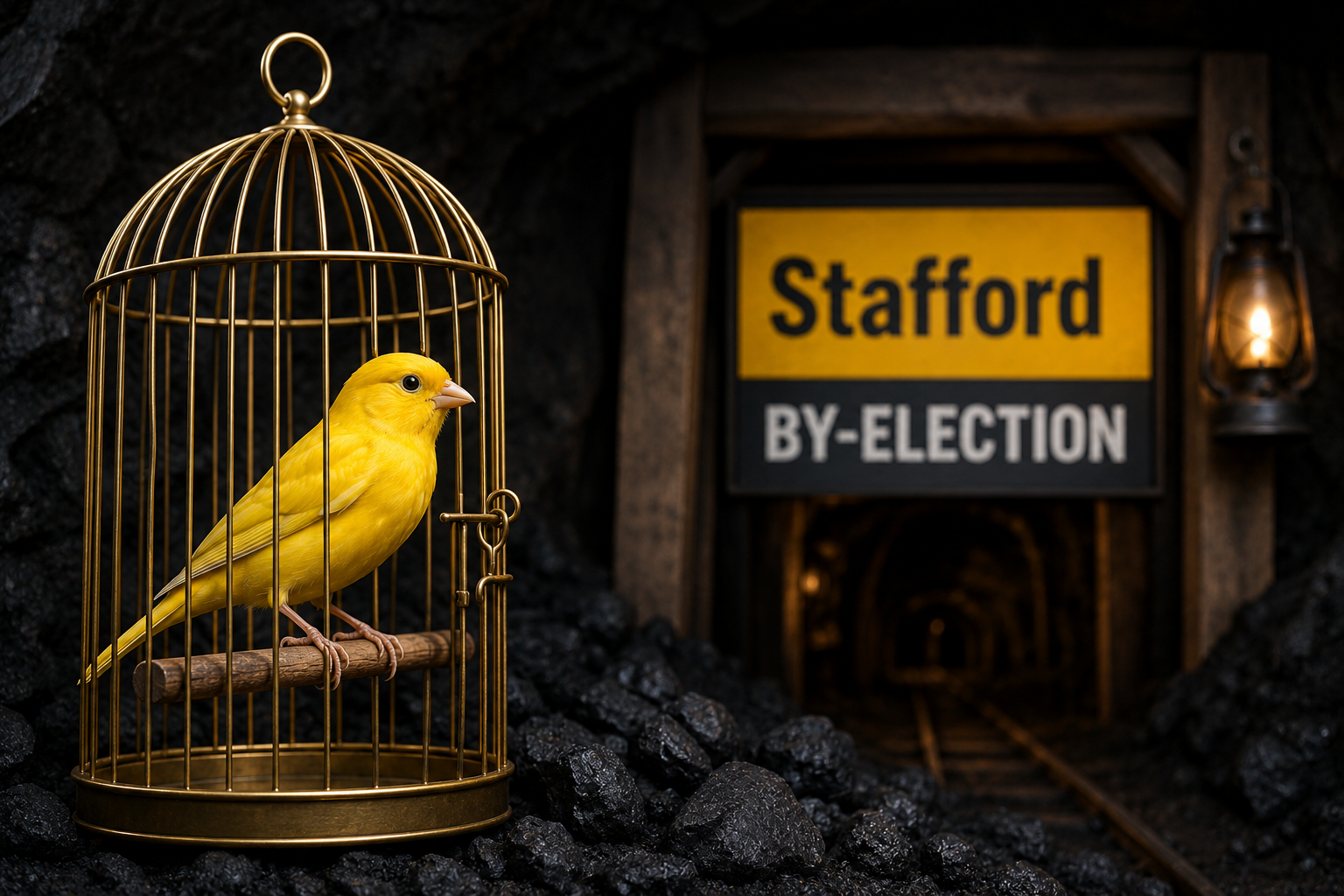
Canary on the campaign trail
Opposition Leader Steven Miles framed this month’s Stafford by-election as a clear-cut Labor victory. The 4.1% swing against them tells a different, seemingly impossible story. A popular first-term government led by David Crisafulli, not yet halfway through its term, drove a swing against the Opposition in their own backyard. For some, this by-election is the canary in the coal mine for Steven Miles’ leadership and ALP backbenchers in marginal seats. For others, it has them questioning the state’s political direction and QLD Labor’s future.
Stafford is a leading indicator seat, one that moves with the broader political trend, often early and visibly. It need not change hands. It need not be marginal. What matters is that its movements reflect the direction of the wider electorate. Interestingly, Stafford has played by-election canary once before. In 2014, the LNP’s Chris Davis resigned from Campbell Newman’s parliament and a by-election was soon called. On election day, ALP candidate Anthony Lynham won the seat back with 50.6% of the primary vote and a 19.1% swing against the LNP. For a government that had reduced Labor to seven seats in 2012, the result was the writing on the wall for then-Premier Newman. At the election-proper in 2015, the LNP suffered a scathing defeat, Newman lost his seat of Ashgrove, and Labor went on to govern for the next nine-and-a-half years.
Across the last six general elections, Stafford has moved with the state every time. In 2009, Labor held it on a 48.4% primary, suffering negatives swings of 6.9% and 4.67% at the seat and state level, respectively. QLD Labor lost nine seats that election. The 2012 contest saw Stafford wiped out with the rest of Bligh’s government. Stafford’s primary fell to 33.58% against a 14.35% swing, almost in lockstep with the statewide 15.59% swing. Through the Palaszczuk years, the seat was held with TPP margins above 60% and only modest movement, 2.8% for in 2017 and 0.22% against in 2020. In 2024, under Crisafulli’s 7% statewide swing, Labor held Stafford against a 6.58% swing of their own.
What has often protected Labor in Stafford is the primary vote. Sitting roughly six points above the state average, Stafford has absorbed shocks that would have flipped more comfortable and comparable seats. That cushion is now weathered and frail.
The 2026 by-election saw Labor’s Stafford primary fall below their 2012 defeat: 30.69% against the LNP’s 40.38%. Luke Richmond only held the seat due to Greens and minor party preferences through compulsory preferential voting. Under CPV, the flow is automatic. Under optional preferential voting, however, the system used in Queensland until 2016, between 35% and 50% of Greens ballots historically exhausted before reaching the major parties. A voter who numbered only one box saw their ballot set aside if their first choice was eliminated. Apply even a moderate exhaustion rate to the 2026 numbers and the Labor vote collapses.
No, a by-election is not a general election, and the turnout of 78.4% sits well below the usual mark. The underlying structural weakness in Labor’s primary is visible, nonetheless.
For Crisafulli, the temptation to carve out more from Labor’s metropolitan base is obvious and it makes sense to weigh a return to OPV. The reality is much more complicated. While it may deepen the LNP’s hold in 2028, OPV cuts both ways. Peter Beattie’s ‘Just Vote 1‘ strategy in 2001 successfully dampened Coalition preferences, delivering Labor sixty-six seats to the Coalition’s fifteen. OPV worked in Beattie’s favour because he was a likeable, visionary leader running against a fractured, directionless opposition. Leadership wins elections and the absence of it loses them. Voting systems simply magnify the results.
Stafford was a vote of confidence in the Crisafulli government, and an early signal that the Premier’s current strategy and leadership style is working. For Miles and his Labor colleagues, the picture is less promising. Between now and 2028, QLD Labor needs to figure out who they are and what they stand for, lest the warning signs become impossible to ignore.