



The Inside Word
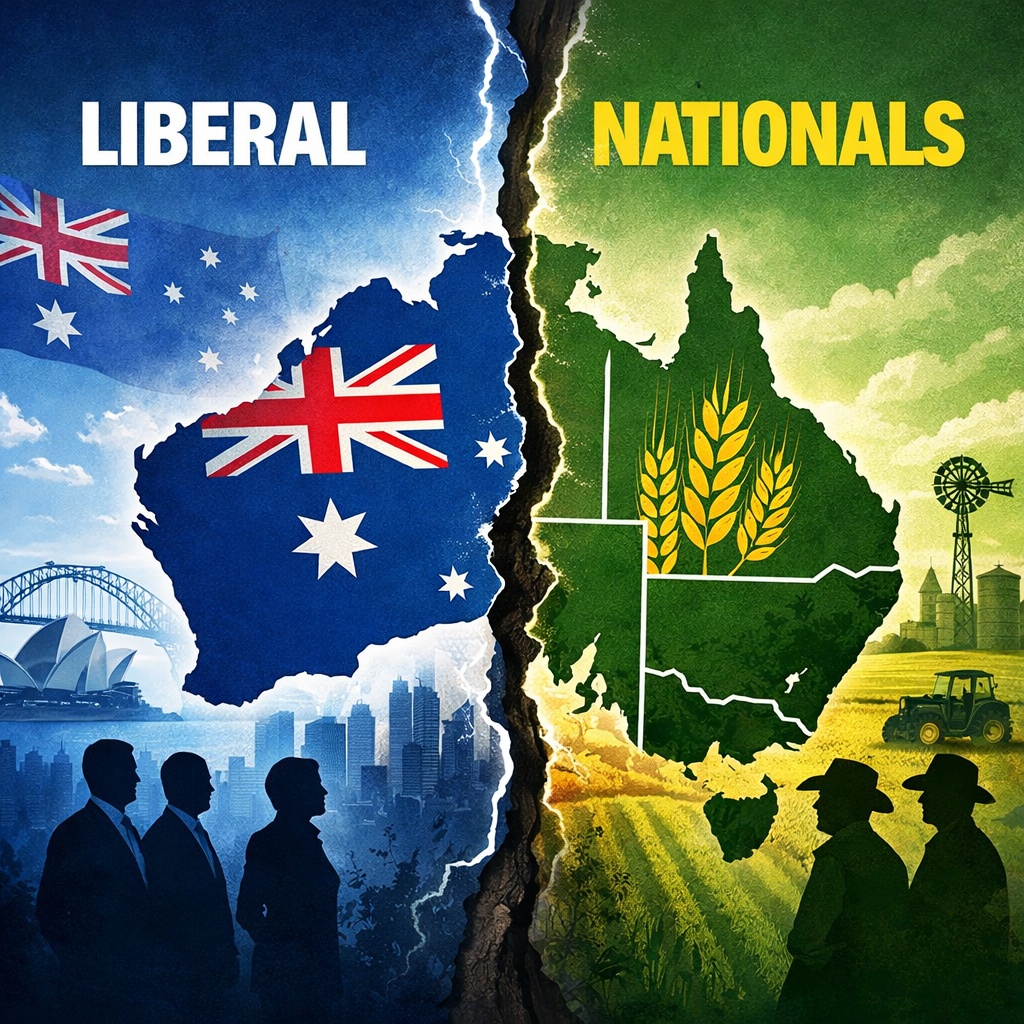
It’s breakup season
The Australian bond market is jittery. The 10-year yield hit 4.83% (at the time of writing) – its highest since November 2023 – as investors braced for the RBA to tighten the screws. Rising yields mean investors are demanding more compensation to lend money. Faith now comes at a premium.
It’s almost poetic. Bonds are built entirely on promises – on trust, stability and the assumption that tomorrow will look broadly like today. Yet here we are, watching volatility spike, just as the political bonds we’ve long taken for granted begin to fracture.
This isn’t uniquely Australian. Across the world, the institutions that once anchored global order are wobbling. Long-standing alliances feel thinner. Assumptions about leadership, restraint and predictability have weakened. Nations are hedging, recalibrating, searching for steadier hands to hold. The result is a fragmented international landscape – loose coalitions replacing once-solid blocs. What’s happening at home is not separate from this moment; it’s a reflection of it.
In Australia, January is when the illusion of steadiness finally gave way. Institutions that once felt immovable now look brittle and reactive.
On 14 December, 15 lives were lost at Bondi Beach in an act of antisemitic terror during Hanukkah. The shock cut through a country unused to that kind of horror. The grief was immediate, as was the demand for action. Tragedy has a way of forcing belief systems to the surface, and we form opinions as a way to process fear, loss and uncertainty and to impose order on chaos.
Unsurprisingly, January has been a confronting month for longstanding institutions. After weeks of resistance, Prime Minister Anthony Albanese announced a Royal Commission into antisemitism – the highest form of inquiry Australia can muster. Former High Court Justice Virginia Bell will lead it, with an interim report due in April and final recommendations by December 2026.
Royal Commissions are often framed as acts of resolve, but they are also political instruments. They focus attention and they apportion responsibility, but in doing so they can just as easily inflame division as resolve it. That tension between justice and unity is now Labor’s to manage. Governing in a fractured environment means accepting that consensus may no longer be the default setting.
While Labor tries to hold the centre, the right is openly splintering. The Coalition split – again – after Nationals senators broke ranks on hate speech laws in the wake of Bondi. Twice in 12 months isn’t a disagreement, it’s a pattern – a slow-motion realisation that shared branding isn’t the same thing as shared values … the political equivalent of we are never, ever, ever getting back together.
Barnaby Joyce saw it coming. He left the Nationals in November and joined One Nation in December, becoming its first MP since Pauline Hanson in the House of Representatives. Less a defection than an acknowledgement that the marriage was already over.
The government’s national gun reform package in response to Bondi exposed a second round of tensions within the Opposition alliance, with Queensland’s LNP refusing to participate. The debate over guns, like the debate over hate speech laws, underscores Australia’s fractured political bonds. One Nation capitalised on that fissure, and now polls above the Liberals in some surveys. The most divisive party in Australian politics is becoming one of its most influential – not because it changed, but because the electorate did.
And One Nation’s confidence is now explicit. Chief of Staff, James Ashby, has confirmed the party is recruiting candidates ahead of what he described as a “significant” announcement to be made on Monday, the eve of the next sitting week. Speaking on Sky News, he cast One Nation as the unofficial opposition on the right – less a protest movement than a party preparing to inherit the spoils of Coalition dysfunction.
For the Liberals, this moment is existential. Their opportunity to redefine themselves is narrowing, squeezed between a Labor Party holding the centre and a populist right that feeds on grievance. The real danger is becoming a diminished echo of one of the political parties already dominating major identity blocs.
The Nationals face a different constraint. Its resistance to change isn’t ideological stubbornness so much as electoral reality. A base that demands continuity leaves little room to adapt, even as the ground beneath it shifts.
But maybe breaking is the point at which you can begin to rebuild.
Sunlight is the best disinfectant, and pressure exposes weaknesses that habit has allowed us to ignore. The bond market isn’t panicking – it’s revelatory. So is the Coalition’s second breakup in a year. So is One Nation’s rise among voters who no longer recognise themselves in the old right.
Gen Z and Millennials will continue to outnumber older cohorts who found certainty in identity, tradition and grievance. That demographic reality reshapes what parties can promise – and what they can no longer avoid. Progressive dominance may still win elections, but governing a nation requires managing those who feel excluded, not just who forms the majority.
Australia isn’t alone. Across democracies, faith in institutions is thinning, not because people have rejected order, but because order is failing to deliver. Bonds, fiscal or political, fail when tension becomes unbearable. The Royal Commission will examine every fracture – social, political and institutional – that allowed Bondi to occur. It will be forensic and uncomfortable, and it will expose weaknesses many have tried to ignore.
But if there’s any hope in this breakup season, it’s this: When things fall apart, we get honest about what wasn’t working and who we want to be; and when bonds are tested, we learn their true strength and begin building ones that might actually last.