



The Inside Word
Back to reality, maybe…
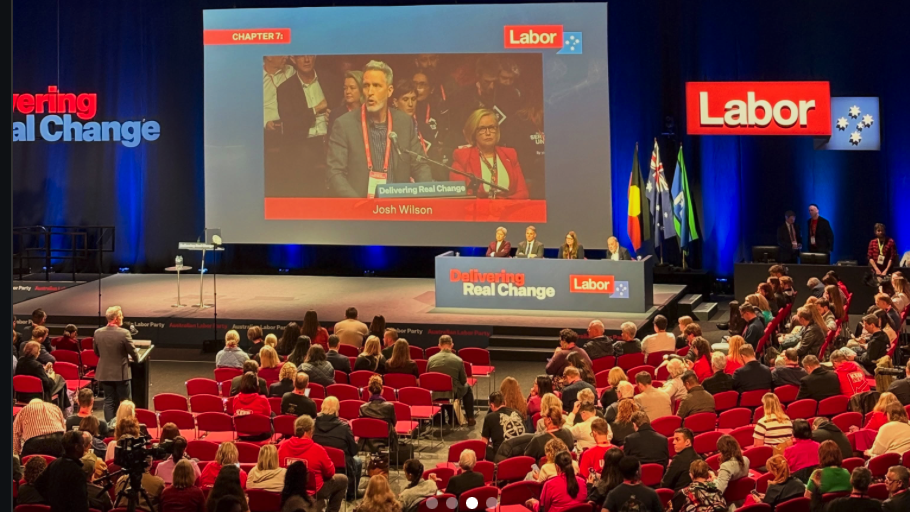
July belonged to the incumbents, though not comfortably. Labor spent the month at its National Conference running the same play it has run for a decade: debate managed behind closed doors, enough of it staged in public to show the party still has diversity of opinions, and a flare-up or two for the media. One Nation went looking for lessons in the UK and Europe. The Coalition used its biggest speech of the month to attack One Nation rather than the Government.
Three things about Labor’s national conference are worth holding onto, which I gleaned from conversations over the last week or so. Labor intends to be a long-term government and the party knows it, which caps how radical any debate is allowed to get. The left faction has the numbers, so the safe assumption on any issue is that if it can move in a more progressive direction, it probably will. And the platform doesn’t commit the Government to a timetable. Timing sits entirely with Cabinet, and the wording that survives the drafting is usually loose enough to accommodate a wide range of policy options. Platform commitments tell you where the party’s centre of gravity sits; they do not tell you what lands in the next Budget.
The substance was in the fringe. On energy, the theme I kept hearing was government as intermediary: stepping between project proponents and private offtakers to close the financing, risk and contracting gaps that unions and think tanks now treat as the binding constraint.
On housing, the most interesting document of the week wasn’t on the floor at all. The John Curtin Research Centre’s Manufacturing Homes, launched Saturday morning with the Housing Minister beside it, argues the shortfall is a productivity problem rather than a demand problem. The prescription treats prefabrication as industrial policy, with procurement doing the heavy lifting: escalating Australian-content mandates across HAFF Round 3, Commonwealth building, Defence Housing Australia and state social housing, backed by a production tax incentive on the critical minerals model.
On AI, the public debate has barely started. The Prime Minister has flagged regulation modelled on the social media ban, and underneath it I’m picking up a serious push for a sovereign, government-owned capability, built at enough scale to keep the commercial offerings honest without blowing the budget, alongside a healthy Australian AI private sector.
Everything else ran second to Labor’s incumbency, new US tariffs and a deteriorating Middle East. Enough has been written about One Nation, so the only point I would add is that the conservative side of politics is again at risk of importing what works in the US or UK without translating it. Shared language isn’t shared culture or shared politics. Also worth watching is One Nation’s hardening line on a self-reliant economy, which businesses and peak bodies should be reading against their own positioning.
For the Coalition, the moment was the Opposition Leader’s Sydney Institute address on 9 July. In the speech, Angus Taylor outlined that Australia is in an economic crisis that doesn’t announce itself like the GFC or the pandemic but is unmistakable in living standards, caused by a state at its largest in forty years outside the pandemic and non-market productivity down almost 10 per cent. His answer is to “lower” four areas: tax, immigration, regulation and energy. The novelty, though, was the sustained criticism of One Nation: a one-person show, with policies costed at roughly a trillion dollars over a decade. Australia needs change, he argued, but not destructive change.
Parliament will resume in under two weeks. Labor returns internally stable and walking into economic headwinds that it needs to address. For everyone else, the task is to convince the public that the economic situation is due to the actions of the Government, while holding out alternatives that build trust with disillusioned voters.